
We would like to acknowledge and thank our partners for their contributions to this project:
- National Association of Chronic Disease Directors (NACDD)
- The Cancer Network
This toolkit is designed to help implement evidence-based practices when communicating about HPV awareness which is promoted through several national observances, including Cervical Cancer Awareness Month in January, National Cancer Prevention Month in February, and National Immunization Awareness Month in August.1 HPV vaccination helps protect people of all genders from several HPV-related cancers. This toolkit provides trusted up-to-date information, statistics and ready-to-use messaging and graphics for social media efforts.
| Note about terminology: The most recent North American Association of Central Cancer Registries (NAACCR) data dictionary only allows categorization by binary sex categories (male or female). We advocate for systematic collection of sex assigned at birth, gender identity, sexual orientation, and intersex status to inform and advance evidence-based guidelines. We use gender-neutral language when possible. Until better data are available, it is reasonable to assume sex and gender are conflated in most data sources. Refer to each source’s data dictionary to fully understand how data items are defined. |
Tip: use these recommended hashtags with this toolkit which helps track the use of these messages and also allows you to see other examples.
- #TAPforHPVvax
- #HPVvaccine
- #HPVprevention
- #VaccinesWork
- #TAPintoCancerControl
About Human Papillomavirus (HPV) & Prevention
Human papillomavirus, or HPV, is a common virus that is spread through intimate contact.2 HPV infections are extremely common, and the vast majority of people will get HPV in their lifetime.2 Many HPV infections are asymptomatic and resolve on their own, but some persistent infections can cause cancers of the cervix, vagina, vulva, penis, anus, and throat.2 HPV is also responsible for a substantial portion of anogenital warts in the United States.2
HPV vaccines can prevent both anogenital warts and 90% of cancers caused by HPV.2 Vaccination is recommended for all adolescents and young adults through age 26, with a first dose administered as early as age nine and a second dose administered six to twelve months later.3 Individuals who did not receive their first dose until after their 15th birthday should receive three doses given over six months.3 People ages 27 through 45 years can still get the HPV vaccine based on discussion with their clinician, if they did not get adequately vaccinated when they were younger and it’s determined it could be beneficial. 3
Data and Statistics
Almost all unvaccinated persons who are sexually active will get HPV.2 Thirteen million Americans get HPV every year.2 HPV causes approximately 36,500 new cancer cases in the United States annually.2 Since the development of HPV vaccines, the rate of infections of HPV types that cause genital warts or cancer has dropped by 88% among teen girls and by 81% among young adult women.2 Among vaccinated women, incidences of cervical precancers caused by HPV types most commonly linked to cervical cancer have dropped by 40 percent.2 To date, more than 135 million doses of HPV vaccines have been administered in the United States.2

National Cancer Institute. Improving HPV Vaccination Rates Will Help Save Lives. National Cancer Institute. Accessed July 27, 2026. https://www.cancer.gov/about-cancer/causes-prevention/risk/infectious-agents/hpv-vaccine-uptake-infographic.
Best Practices for Communicating About HPV Prevention
Give a strong, clear, presumptive vaccine recommendation
- Recommend the HPV vaccine as you would any other vaccine. A provider recommendation is the single most important factor in whether parents choose to vaccinate their children.
- Social media messaging from an authoritative source may reinforce beliefs about benefits of vaccination among adolescents already seeking health information.4
- Assume the parent wants to vaccinate instead of framing the recommendation as a question.5
- Use anatomy-based language when discussing screening and vaccination recommendations. Base recommendations on the organs a person has rather than assumptions about gender identity.
- Bundle recommendations for vaccines together (e.g., “Now that your child is 11, they need three vaccines to protect against meningitis, HPV cancers and whooping cough.”)4
- Prepare and practice responses to common parent questions or concerns.5
- Ensure a consistent message from office staff to clinicians.6
- Check patient immunization status every visit and remind families to get vaccines if a child falls behind.6
- Have materials available for parents who have questions, including a list of credible websites parents or adolescents can use as a source of information. Visual aids can also help providers communicate complex information.
Emphasize the timeliness and urgency of vaccination
- Providers may vaccinate children against HPV as early as age nine.3 All children should be given their first vaccine dose by their 11th birthday or at the earliest age possible before age 26.3
- Emphasize that vaccines are most effective when initiated before potential HPV exposure. (e.g., “The vaccine prevents 90% of cancers caused by HPV in both boys and girls. It’s safe and effective, and I recommend that your child get it today to be protected from these cancers.”)7
- Recommend that patients receive the vaccine during their visit, rather than suggesting a later date.6
- Explain the vaccine is most effective amongst preteens and adolescents because they have the strongest immune response.8
- Continue to recommend the HPV vaccine, even if the parent has previously refused. Studies show that many parents eventually change their minds.
Recommend the vaccine for all patients, not just those perceived to be high risk.
- Recommend the vaccine to girls and boys.
- Recommend the vaccine for eligible patients regardless of whether they are sexually active or not.
- Recommend the vaccine for eligible patients regardless of sexual orientation or gender identity.
- Tailored interventions for specific immigrant groups and subpopulations are needed.9
Provide Give a strong, clear, presumptive vaccine recommendation
- Recommend the HPV vaccine as you would any other vaccine. A provider recommendation is the single most important factor in whether parents choose to vaccinate their children.
- Social media messaging from an authoritative source may reinforce beliefs about benefits of vaccination among adolescents already seeking health information.4
- Assume the parent wants to vaccinate instead of framing the recommendation as a question.5
- Use anatomy-based language when discussing screening and vaccination recommendations. Base recommendations on the organs a person has rather than assumptions about gender identity.
- Bundle recommendations for vaccines together (e.g., “Now that your child is 11, they need three vaccines to protect against meningitis, HPV cancers and whooping cough.”)4
- Prepare and practice responses to common parent questions or concerns.5
- Ensure a consistent message from office staff to clinicians.6
- Check patient immunization status every visit and remind families to get vaccines if a child falls behind.6
- Have materials available for parents who have questions, including a list of credible websites parents or adolescents can use as a source of information. Visual aids can also help providers communicate complex information.
Communicating with Specific Audiences
Communication-related issues may also play a role in health disparities and patient engagement. Consider the information most useful to specific patients and subpopulations. Tailor communication with messages that also address conditions where communities live, learn, work and play, as these social drivers of health can impact a wide range of health risks and outcomes. To ensure messages resonate with the intended audience, we also recommend referring to the National Networks’ existing resources and adapting messages to reflect individuals’ lived experiences.
HPV Resources
| ACS: Resource Center – NRTCC | The ACS Nation Roundtable on Cervical Cancer has a lot of resources on HPV vaccination |
| Boost Oregon Addressing Vaccine Hesitancy with Motivational Interviewing Guide | Explanation of motivational interviewing (MI), core skills of MI and how to facilitate a decision regarding vaccination. |
| CDC: HPV Educational Tools and Resources | CDC materials to help educate healthcare staff, patients, and parents on the importance of routine HPV vaccination. |
| CDC: Talking with Parents about HPV Vaccination | CDC education on HPV, vaccines, and HPV risks to encourage parents to give their children the HPV vaccine |
| CDC: Communication Toolkit: School-based HIV/STI Prevention Communication Resources ( NOTE: restored due to court order in 2025 | CDC toolkit with communication resources focused on school-based HIV/STI Prevention. |
| CDC: Immunize.org Vaccine Information Statements | Providing CDC curated HPV Vaccine Information Statements in English and 33 other languages. |
| The Cancer Network | Improving the lives of LGBTQIA+ cancer survivors through advocacy, education, and training. LGBTQIA+ Cancer Network’s HPV Risk Assessment Welcoming Provider Directory |
| Equality California’s Diversity, Equity, and Inclusion Program | Free, online LGBTQIA+ HPV training, “Increasing Vaccination Rates for the LGBTQIA+ Community.” This curriculum outlines evidence-based, LGBTQIA+ sensitive strategies for increasing HPV vaccination rates among adolescents. Training engages and trains healthcare workers in evidence-based, LGBTQIA+ sensitive practices to encourage HPV vaccination, and to increase HPV vaccination rates among LGBTQIA+ populations, particularly transgender and gender-nonconforming youth. |
| Gay and Lesbian Medical Association | A group dedicated to ensuring health equity for LGBTQIA+ people through research, advocacy, and education. GLMA also shares resources for both patients and providers caring for LGBTQIA+ people. |
| HPV Cancers Alliance | Sharing education and resources to increase HPV vaccination rates and prevent HPV-related cancers. |
| HPV Vaccination Cancer Plan Tip Sheet | Tip sheet used to help CCC program staff, coalition staff, and volunteers update their CCC plans. The Tip Sheet includes tips about engaging partners, identifying and using the right data, setting baselines and targets, and crafting objectives and strategies, as well as a list of practical questions to guide discussion on the topic with your coalition. |
| The National Cervical Cancer Coalition | Helping women, family members and caregivers battle the personal issues related to cervical cancer and HPV and advocating for cervical health in all women. |
| NOMAN Campaign | A campaign aiming to increase HPV vaccination rates for all genders, promote parent education, and influence policy related to HPV vaccinations. |
| Pap-a-thon Toolkit | Hosting a Women’s Community Health Event – Increasing Cervical Cancer Screening in Rural Tribal Communities (itcmi.org) |
| Queer Health is Power Social Media National Partner Packet | A new set of social media shareables focused on access to care, LGBTQIA+ screening, and HPV. This project was piloted in New York and is now available for national use. |
HPV Messages and Graphics
General Audience Messages
| Message | Graphic |
| #HPV vaccination is cancer prevention. Check out the benefits of getting the #HPVvaccine. #cdc #TAPintoCancerControl #TAPforHPVvax https://bit.ly/4gB2P8G |  Download Graphic |
| HPV vaccination prevents cancer. The HPV vaccine protects against infections that can lead to cervical, anal, penile, throat, and other cancers later in life. Vaccinating at ages 11–12 provides the strongest protection before exposure to HPV. Talk to your child’s healthcare provider today. https://bit.ly/4gB2P8G #HPVVaccine #CancerPrevention #VaccinesWork #TAPintoCancerControl #TAPforHPVvax |  Download Graphic |
| Your child’s healthcare provider recommends vaccines that protect now and later. The HPV vaccine is routinely recommended alongside other adolescent vaccines and has been shown to provide long-lasting protection against HPV-related cancers. Don’t wait—ask about HPV vaccination at your next visit. https://bit.ly/4gB2P8G #ProtectTheirFuture #HPVPrevention #TAPforHPVvax #TAPintoCancerControl |  Download Graphic |
| Think HPV vaccination is only for girls? Think again. HPV can cause cancers in men, too—including throat, anal, and penile cancers. Vaccination helps protect everyone. https://bit.ly/3SP5hPd #MensHealth #HPVVaccine #TAPforHPVvax #TAPintoCancerControl |  Download Graphic |
| Protect their future. HPV vaccination is recommended for boys and young men and helps prevent HPV-related cancers. Ask your healthcare provider if you’re up to date. https://bit.ly/3SP5hPd #CancerPrevention #MensHealth #TAPforHPVvax #TAPintoCancerControl |  Download Graphic |
| Questions about the HPV vaccine? You’re not alone. Talk with a doctor about what the vaccine protects against, how it was studied, and why it is recommended. Trusted conversations help families make informed decisions. https://bit.ly/3RxXbtN #AskQuestions #TrustedHealthInfo #TAPforHPVvax #TAPintoCancerControl |  Download Graphic |
| The HPV vaccine is safe. It has been studied for many years and helps prevent cancers caused by HPV infection. If you have concerns, bring them to your healthcare provider—your questions deserve answers. https://bit.ly/3RxXbtN #InformedChoices #CancerPrevention #TAPforHPVvax #TAPintoCancerControl |  Download Graphic |
| It’s never too late to protect your future. If you’re 26 or younger, ask about catching up on the HPV vaccine. https://bit.ly/4vxkAtw #HPVPrevention #TAPforHPVvax #TAPintoCancerControl |  Download Graphic |
| Preventing cancer is better than treating it. https://bit.ly/4vZeHGd #ProtectTheirFuture #HPVPrevention #TAPforHPVvax #TAPintoCancerControl |  Download Graphic |
| HPV vaccination is safe, effective and long-lasting. https://bit.ly/4pf43bT #ProtectTheirFuture #HPVPrevention #TAPforHPVvax #TAPintoCancerControl |  Download Graphic |
Messages for healthcare professionals
| Message | Graphic |
| When should you start recommending the #HPV vaccine to your patients? Stay up to date with age-based HPV vaccination guidelines. https://bit.ly/4vpSpws #TAPforHPVvax #TAPintoCancerControl #cdc |  Download Graphic |
| Did a parent refuse your recommendation for #HPV vaccination for their child? Don’t give up! Studies show that persistent recommendations can change a parent’s mind and increase the rate of HPV vaccinations among adolescents. https://bit.ly/4fyIUGo #cdc #TAPforHPVVax #TAPintoCancerControl |  Download Graphic |
| Talking about the #HPV vaccine with parents is vital to reducing the risks of certain cancers for children. However, these conversations aren’t always easy for providers to navigate. Here are 5 ways to boost #HPVVax rates: https://bit.ly/4fyIUGo #TAPforHPVvax #TAPintoCancerControl |  Download Graphic |
| Help patients who are LGBTQIA+ with questions about #HPV, look at this resource from the @FenwayHealth. https://tinyurl.com/52fx3nd9 #transhealth #TAPforHPVax #LGBT #TAPintoCancerControl |  Download Graphic |
| Providers, here are tips for talking with parents, caregivers and families about the HPV vaccine. https://bit.ly/44XJPKr #TAPforHPVvax #TAPintoCancerControl |  Download Graphic |
| The best #HPVVax recommendation is strong, clear, presumptive and bundled: “Now that your child is 11, they are due for vaccinations today to protect from meningitis, HPV cancers and whooping cough. Do you have any questions?” https://bit.ly/4pkADJt #VaccinesWork #TAPforHPVvax #TAPintoCancerControl |  Download Graphic |
| Acknowledging possible side effects of #HPV vaccines could help to establish trust with your patients and their parents. Share this @CDC_Cancer HPV vaccine safety document with your patients to inform them of potential side effects. https://tinyurl.com/5d864c45 #cdc #TAPforHPVvax #TAPintoCancerControl |  Download Graphic |
| Caring for LGBTQIA+ patients requires knowing how to communicate respectfully and making them feel at ease. Here is a resource from @The Cancer Network to build your knowledge and skills. https://bit.ly/3Tw8t2e #PrideInHealth #VaccinesWork #TAPforHPVvax #TAPintoCancerControl |  Download Graphic |
| HPV vaccination and screening guidance should be based on anatomy and risk — not assumptions about identity. Make sure your LGBTQIA+ patients get the recommendation they need. https://bit.ly/3SVEocl #VaccinesWork #TAPforHPVvax #TAPintoCancerControl |  \ \Download Graphic |
Black & African American Persons
| Messages | Graphics |
| Protecting our communities starts with prevention. HPV-related cancers affect families across the United States. Vaccination is a proven way to reduce cancer risk before exposure to HPV. Talk with a trusted healthcare provider about HPV vaccination. #BlackHealthMatters #CancerPrevention #HPVVaccine #TAPforHPVvax #TAPintoCancerControl |  Download Graphic |
| Trust matters. Have questions about the HPV vaccine? Talk to your doctor, nurse, or local health professional and get answers based on evidence. Informed decisions help protect our children and communities. #HealthEquity #TrustedInformation #TAPforHPVvax #TAPintoCancerControl |  Download Graphic |
| Protecting our communities starts with prevention. Make sure you protect children age 9 and above with #HPV Vaccination. https://bit.ly/4pf43bT #TAPforHPVvax #TAPintoCancerControl |  Download Graphic |
LGBTQIA+
| Messages | Graphics |
| Your health matters. Whether you’re LGBTQIA+, questioning, or seeking affirming healthcare, HPV vaccination is an important part of preventive care. Talk with a healthcare provider about staying protected. Looking for a safe and welcoming provider in your area? Check out this resource: https://www.cancer-network.org/screening-providers/ #PrideInHealth #VaccinesWork #TAPforHPVvax #TAPintoCancerControl |  Download Graphic |
| The HPV vaccine is for EVERYONE, not just people with a cervix. @The Cancer Network https://bit.ly/3Tw8t2e #LGBTQIAHealth #HPVVaccine #PreventCancer #TAPforHPVvax #TAPintoCancerControl |  Download Graphic |
| HPV affects people of all genders and sexual orientations. Vaccination helps protect against HPV-related cancers and diseases and is recommended for everyone within eligible age groups. Protection starts before exposure. #LGBTQIAHealth #HPVVaccine #PreventCancer #TAPforHPVvax #TAPintoCancerControl |  Download Graphic |
| All children should get the HPV vaccine as early as age 9. The HPV vaccine is cancer prevention for their future. https://bit.ly/3Tw8t2e #LGBTQIAHealth #HPVVaccine #TAPforHPVvax #TAPintoCancerControl |  Download Graphic |
Asian American Persons
| Messages | Graphics |
| Share information and resources on HPV vaccination. Protecting future generations is a community effort. Learning about HPV vaccination and sharing accurate information can help keep families healthy. https://bit.ly/4pf43bT #AAPIHealthEquity #PreventCancer #HPVVaccine #CancerPrevention #TAPforHPVvax #TAPintoCancerControl |  Download Graphic |
| Healthy families plan ahead. HPV vaccination today can help prevent cancer tomorrow. Talk with your child’s healthcare provider about recommended vaccines. https://bit.ly/4pf43bT #AAPIHealth #HPVVaccine #CancerPrevention #TAPforHPVvax #TAPintoCancerControl |  Download Graphic |
| Cancer prevention starts with knowledge. The HPV vaccine helps protect against several cancers and is recommended for adolescents before HPV exposure. Talk with a trusted healthcare professional about vaccination. https://bit.ly/4Hispf43bT #AAPIHealth #HPVVaccine #CancerPrevention #TAPforHPVvax #TAPintoCancerControl |  Download Graphic |
Hispanic & Latine Persons
| Messages | Graphics |
| #DidYouKnow that #HPV vaccination rates are higher among Hispanic and Latine adolescents when Spanish-language information and resources are available to their parents? @ImmunizeOrg provides a Spanish-language translation of @CDC_Cancer’s HPV fact sheet that you can provide to patients. Translations are also available in French, Chinese, Arabic, and more. https://tinyurl.com/3tkf7mht #cdc #FamiliaSaludable #TAPforHPVVax ¿#SabíasQue las tasas de vacunación contra el #VPH son más altas entre los adolescentes hispanos y latin/o/a/x cuando sus padres tienen acceso a información y recursos en español? @ImmunizeOrg proporciona una traducción al español de la hoja informativa sobre el VPH de @CDC_Cancer que puedes ofrecer a los pacientes. También hay traducciones disponibles en francés, chino, árabe y otros idiomas. https://tinyurl.com/3tkf7mht #cdc #FamiliaSaludable #TAPforHPVvax #TAPintoCancerControl |  Download Graphic |
| @ImmunizeOrg provides a Spanish-language translation of @CDC_Cancer’s HPV fact sheet that you can provide to patients. Translations are also available in French, Chinese, Arabic, and more. https://tinyurl.com/3tkf7mht #ccthpv #cdc #dcpc #FamiliaSaludable #TAPforHPVVax @ImmunizeOrg proporciona una traducción al español de la hoja informativa sobre el VPH de @CDC_Cancer que puede proporcionar a los pacientes. Las traducciones también están disponibles en francés, chino, árabe y más. https://tinyurl.com/3tkf7mht #cdc #FamiliaSaludable #TAPforHPVvax #TAPintoCancerControl |  Download Graphic |
| Protect your child’s future. HPV vaccination helps prevent several cancers and works best when given during adolescence. Ask your healthcare provider if your child is up to date. #FamiliaSaludable #HPVVaccine #TAPforHPVVax Proteja el futuro de sus hijos.La vacuna contra el VPH ayuda a prevenir varios tipos de cáncer y funciona mejor cuando se administra durante la adolescencia.Pregunte a su profesional de salud si su hijo está al día con sus vacunas. #FamiliasSaludables #PrevencionDelCancer #TAPforHPVvax #TAPintoCancerControl |  Download Graphic |
Native & Indigenous Persons
| Messages | Graphics |
| Strong communities begin with prevention. HPV vaccination helps reduce the risk of several cancers and is an important tool for protecting our youth. Talk with your local healthcare team about recommended vaccines. #NativeHealth #HPVVaccine #CancerPrevention #TAPforHPVvax #TAPintoCancerControl |  Download Graphic |
| HPV vaccination is a safe and effective way to help prevent several cancers later in life. By protecting our youth, we help strengthen the health and well-being of our families and communities for years to come. Talk with your healthcare provider or tribal health clinic about HPV vaccination. https://bit.ly/4piAlCN #IndigenousHealth #CancerPrevention #HealthyGenerations #TAPforHPVvax #TAPintoCancerControl |  Download Graphic |
| Every generation deserves the opportunity for a healthier future. Ask your healthcare provider about HPV vaccination and how it helps prevent cancer. https://bit.ly/4piAlCN #IndigenousHealth #HealthyCommunities #TAPforHPVvax #TAPintoCancerControl |  Download Graphic |
Native Hawaiian and Pacific Islander
| Messages | Graphics |
| Cancer prevention saves lives. HPV vaccination is a safe and effective way to help protect adolescents from HPV-related cancers later in life. Talk with your healthcare provider today. https://bit.ly/4piAlCN #NHPIHealth #CancerPrevention #TAPforHPVvax #TAPintoCancerControl |  Download Graphic |
| The HPV vaccine can protect against HPV-related cancers and can be given as early as age 9. #AAPIHealthEquity #CancerPrevention #HealthyCommunities #TAPforHPVVax |  Download Graphic |
| Every generation deserves the opportunity for a healthier future. Ask your healthcare provider about HPV vaccination and how it helps prevent cancer. #NHPIHealth #CancerPrevention #TAPforHPVvax #TAPintoCancerControl |  Download Graphic |
Rural Communities
| Messages | Graphics |
| Living in a rural community shouldn’t mean fewer opportunities for cancer prevention. The HPV vaccine is a safe and effective way to reduce future cancer risk for adolescents age 9 and up. If transportation, cost, or scheduling is a concern, ask your healthcare provider or local health department about available vaccine assistance programs. Every visit is an opportunity to stay protected. https://bit.ly/4piAlCN #RuralHealth #CancerPrevention #HPVVaccine #TAPforHPVvax #TAPintoCancerControl |  Download Graphic |
| Many rural families face long travel times and limited healthcare access. If your child is due for vaccines, ask your clinic whether HPV vaccination can be given during the same visit. One appointment can make a lifelong difference. If transportation, cost, or scheduling is a concern, ask your healthcare provider or local health department about available vaccine assistance programs. #RuralFamilies #PreventCancer #TAPforHPVvax #TAPintoCancerControl |  Download Graphic |
| Strong communities start with healthy families. The HPV vaccine helps protect adolescents from several HPV-related cancers in adulthood. Taking advantage of routine healthcare visits can help keep your child healthy now and in the future. Ask your healthcare provider about HPV vaccination today. #RuralFamilies #CancerPrevention #HealthyCommunities #TAPforHPVvax #TAPintoCancerControl |  Download Graphic |

People with Low Income or Limited Resources
| Messages | Graphics |
| Parents and caregivers play an important role in preventive health. Ask your healthcare team about HPV vaccination and how to make healthcare visits accessible and affordable. #InclusiveHealth #CaregiverSupport #TAPforHPVvax #TAPintoCancerControl |  Download Graphic |
| HPV vaccination is a safe and effective way to help prevent several cancers later in life. Many families can receive recommended vaccines through insurance or vaccine assistance programs. Talk with your healthcare provider or local health clinic to learn about your options. https://bit.ly/4piAlCN #CancerPrevention #HealthyFamilies #HPVVaccine #TAPforHPVvax #TAPintoCancerControl |  Download Graphic |
| The HPV vaccine helps prevent several cancers and is recommended for adolescents. If you have questions about vaccine costs or coverage, your healthcare team can help you find available resources. Talk with your provider today. #CommunityHealth #HPVvaccine #PreventCancer #TAPforHPVvax #TAPintoCancerControl |  Download Graphic |
People with Disabilities
| Messages | Graphics |
| Everyone deserves access to cancer prevention. People with disabilities should have the same opportunities to receive recommended vaccines, including HPV vaccination. Talk with your healthcare provider about any accommodations you may need. #DisabilityHealth #HealthEquity #TAPforHPVvax #TAPintoCancerControl |  Download Graphic |
| Parents, family members or support personnel play an important role in preventive health. Let your healthcare provider know what accommodations you or your loved one require. This is an information sheet about basic rights of patients with disabilities in health care: https://adata.org/factsheet/accessible-health-care/ #InclusiveHealth #CaregiverSupport #TAPforHPVvax #TAPintoCancerControl |  Download Graphic |
| People with disabilities should have the same opportunities to receive recommended vaccines, including HPV vaccination. Talk with your healthcare provider about any accommodations you may need. #DisabilityHealth #HealthEquity #TAPforHPVvax #TAPintoCancerControl |  Download Graphic |

Back to School/Parents
| Messages | Graphics |
| As your kids get back to school, make sure they are up to date on their vaccines–including HPV. #Backtoschool #TAPforHPVvax #TAPintoCancerControl |  Download Graphic |
| What do these things have in common is PROTECTION. The #HPVvaccine provides protection from #HPV before exposure. This vaccine is most effective when given between ages 9-12. https://bit.ly/4piAlCN #Backtoschool #TAPforHPVvax #TAPintoCancerControl |  Download Graphic |
| If your child has not received their #HPVvaccine yet, ask your doctor for it at your child’s next physical. #Backtoschool #TAPforHPVvax #TAPintoCancerControl https://bit.ly/4piAlCN |  Download Graphic |
| Your child has the best immune response against HPV by getting the HPV vaccine early. #HPVvaccination is cancer prevention, and it can begin as early as age 9. https://bit.ly/4piAlCN #Backtoschool #TAPforHPVvax #TAPintoCancerControl |  Download Graphic |
Bonus Graphics
 Download Graphic |  Download Graphic |
 Download Graphic |  Download Graphic |
 Download Graphic |  Download Graphic |
 Download Graphic |  Download Graphic |
 Download Graphic |  Download Graphic |
Download All Messages and Graphics
Social media management tools like Hootsuite and Sprout Social offer bulk scheduling options for uploading multiple messages at once. The spreadsheet below can be adapted to fit multiple scheduling platforms or services. They are currently formatted to work with Sprout Social’s bulk scheduling option. Please review the bulk scheduling format requirements for your specific platform before posting.
If you would like to download all images in this social media toolkit, click on each network below for a zip file with all of the graphics in a 1080 x 1080 format which works for all major social media platforms.
Template Graphics
Need to adjust our designs? Use our Canva Templates for GW TAP’s HPV Awareness Month Graphics
*New* HPV Screening At-Home Message Set
In light of the recent FDA approval and availability of the at-home self-sampling HPV screening option, the GW Cancer Center developed timely messaging if your program needs to provide clarity and encouragement for this new option. You can download this entire message and graphics set as you need. Here is the recent news article about this decision, the ASCO article about this decision and the JAMA article about the study.
Files for X (Twitter), Facebook and LinkedIn
Files for Instagram
| Message | Graphic |
| Testing for HPV is getting easier. A new at-home HPV screening kit is FDA-approved and designed for privacy and convenience. It will be available by prescription, through a telehealth service, for people with a cervix who are 25-65 years old, and of average risk. Learn more at: https://nbcnews.to/4jiHY7P |  |
| Soon you can test for HPV from the comfort of your own home! It’s private, easy, and a step toward preventing cervical cancer. Read more about it! https://nbcnews.to/4jiHY7P | 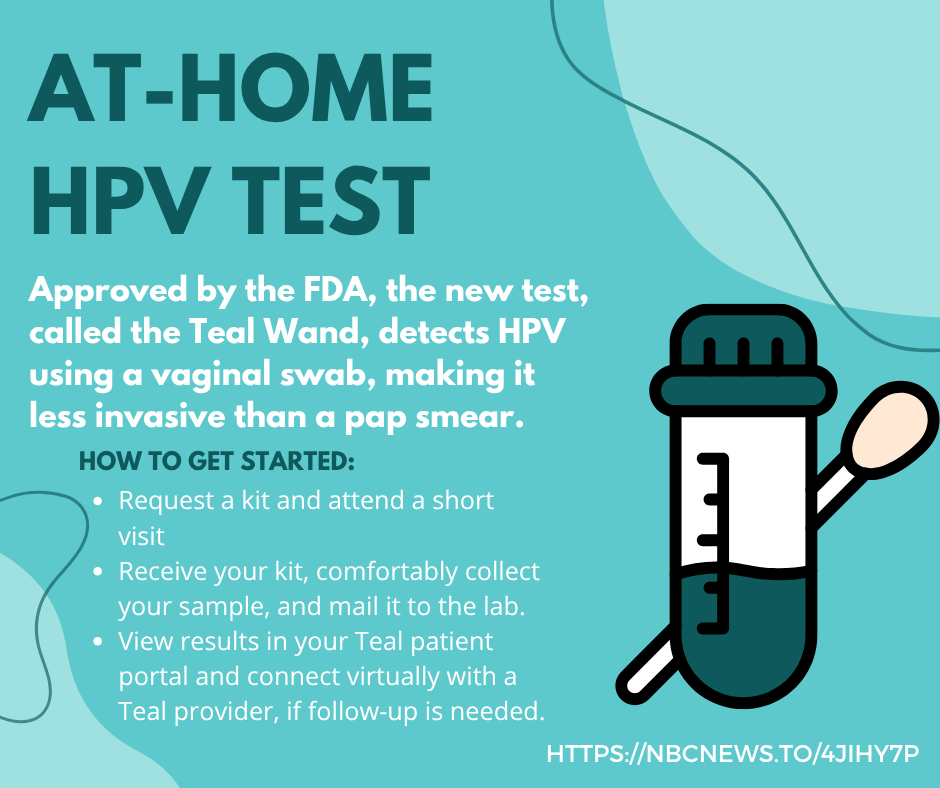 |
| Taking charge of your health has never been easier. With at-home HPV tests, you can screen privately and conveniently. Detecting high-risk HPV early can make all the difference. | 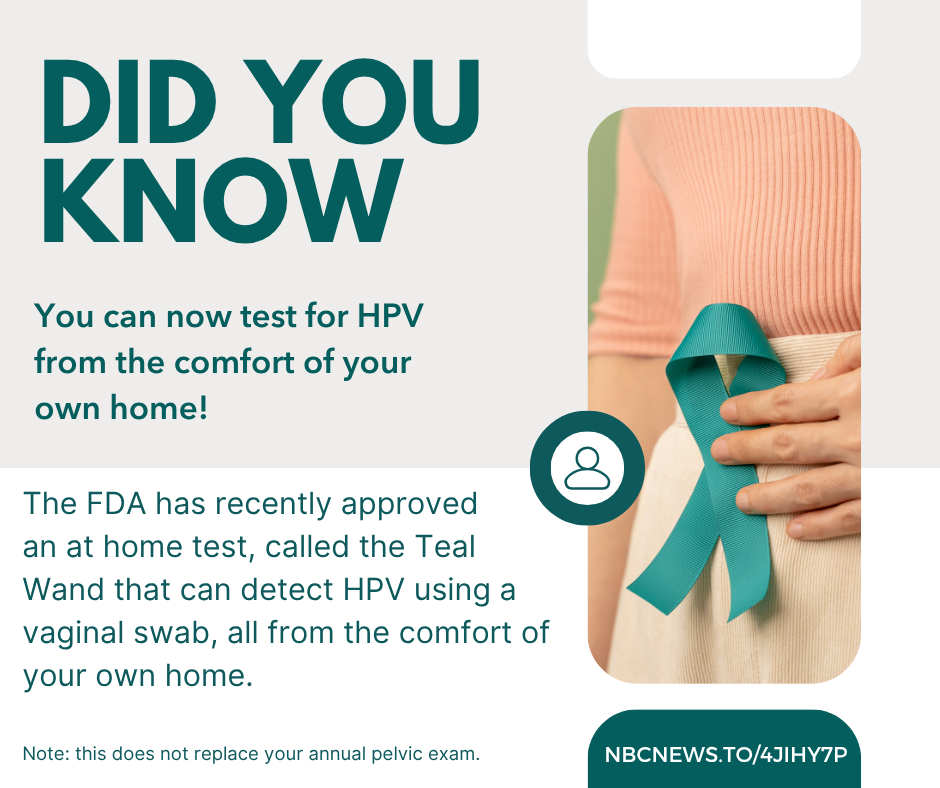 |
| Did you know that most cervical cancers are preventable? With at-home HPV tests, you can screen privately and conveniently. No clinic visit required. Detecting high-risk HPV early can make all the difference. Whether you’re overdue for a Pap test or prefer the comfort of home, self-collection is a proven, FDA-approved option and can be a game-changer in early detection. | 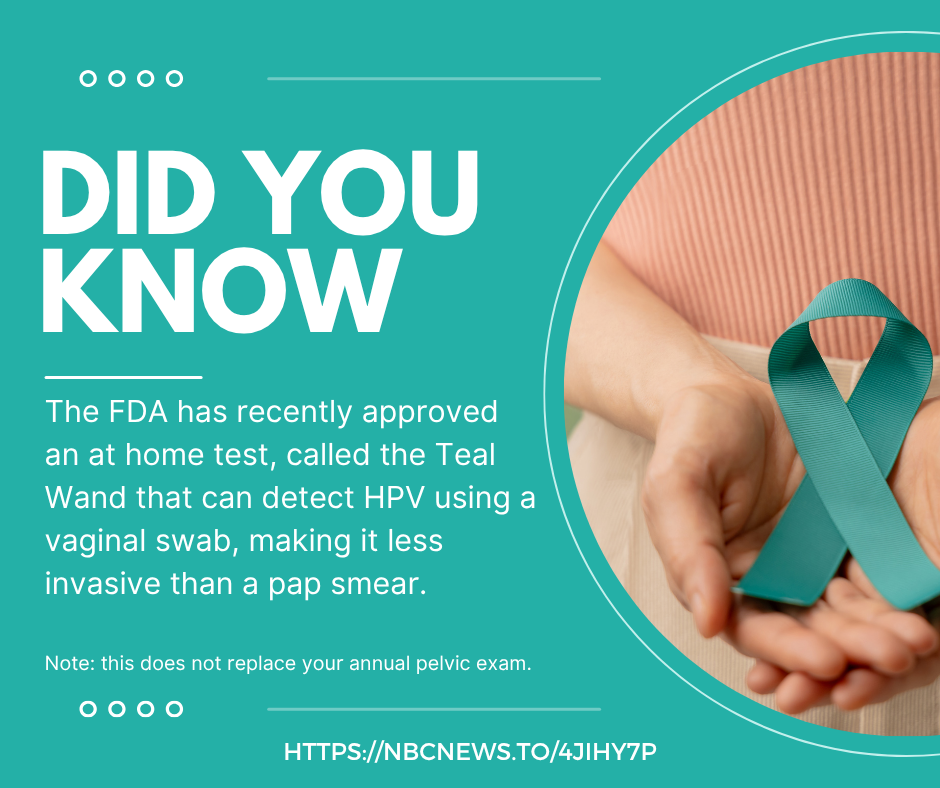 |
| The FDA has recently approved an at-home HPV test! The new test, called the Teal Wand, detects HPV using a vaginal swab, making it less invasive than a pap smear. Read more: https://nbcnews.to/4jiHY7P | 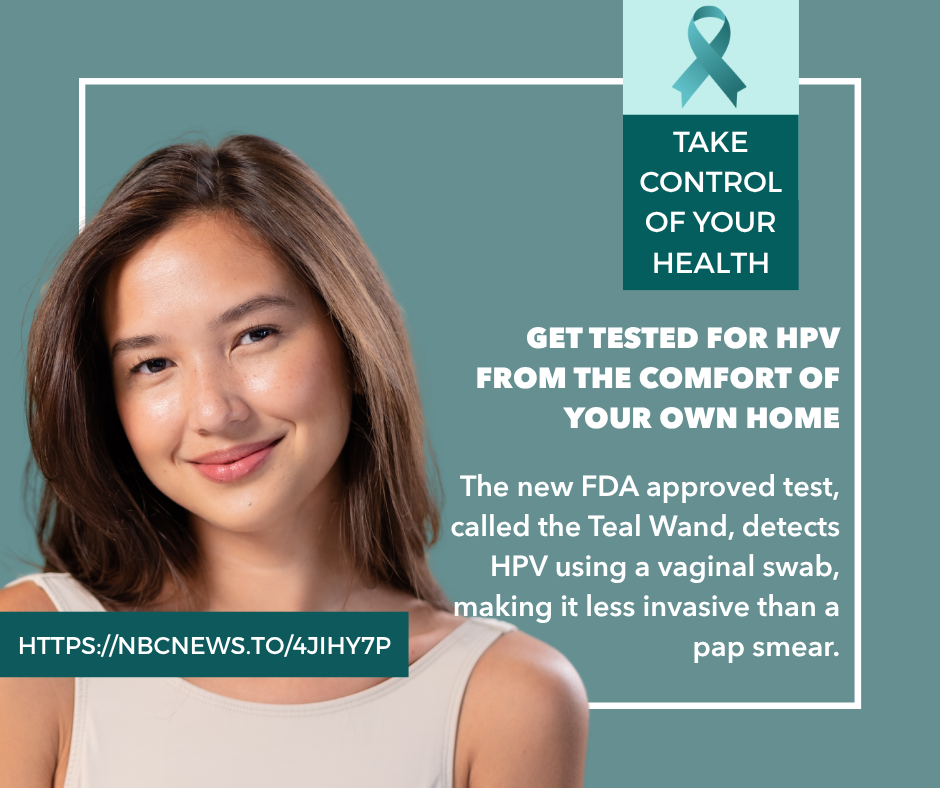 |
| The FDA has recently approved an at-home HPV test! The new test, called the Teal Wand, detects HPV using a vaginal swab, making it less invasive than a pap smear. Read more at: https://nbcnews.to/4jiHY7P |  |
References
- Centers for Disease Control and Prevention. National Immunization Awareness Month (NIAM). Updated August 29, 2024. Accessed July 9, 2026. https://www.cdc.gov/vaccines/php/national-immunization-awareness-month/index.html
- Centers for Disease Control and Prevention. Reasons to get vaccinated. Updated 2024. Accessed June 23, 2026. https://www.cdc.gov/hpv/vaccines/reasons-to-get.html
- Centers for Disease Control and Prevention. HPV vaccine recommendations. Updated 2024. Accessed June 23, 2026. https://www.cdc.gov/hpv/hcp/vaccination-considerations/index.html
- Li D, Fu L, Yang Y, An R. Social media-assisted interventions on human papillomavirus and vaccination-related knowledge, intention, and behavior: a scoping review. Health Educ Res. 2022;37(2):104-132. doi:10.1093/her/cyac007.
- Centers for Disease Control and Prevention. Give a strong vaccine recommendation. Updated 2024. Accessed June 23, 2026. https://www.cdc.gov/iqip/hcp/strategies/strong-vaccine-recommendation.html
- Centers for Disease Control and Prevention. 5 ways to boost your HPV vaccination rates. Updated 2024. Accessed June 23, 2026. https://www.cdc.gov/hpv/hcp/vaccination-considerations/boost-rates.html
- American Academy of Pediatrics. How pediatricians can recommend HPV vaccination to parents and caregivers. Updated 2025. Accessed June 23, 2026. https://www.aap.org/en/patient-care/immunizations/human-papillomavirus-vaccines/how-to-recommend-hpv-vaccination/
- Ellingson MK, Shikha H, Nyhan K, et al. Human papillomavirus vaccine effectiveness by age: a systematic review. Hum Vaccin Immunother. 2023;19(2):2239085. doi:10.1080/21645515.2023.2239085
- Tobaiqy M, MacLure K. A systematic review of human papillomavirus vaccination challenges and strategies to enhance uptake. Vaccines (Basel). 2024;12(7):746. doi:10.3390/vaccines12070746
- Gagneur A. Motivational interviewing: a powerful tool to address vaccine hesitancy. Can Commun Dis Rep. 2020;46(4):93-97. doi:10.14745/ccdr.v46i04a06
- Chan D, Li C, Law B, et al. Factors affecting HPV vaccine uptake among ethnic minority adolescent girls: a systematic review and meta-analysis. Asia Pac J Oncol Nurs. 2023;10(9):100279. doi:10.1016/j.apjon.2023.100279
- Dang JHT, McClure S, Gori ACT, et al. Implementation and evaluation of a multilevel intervention to increase uptake of the human papillomavirus vaccine among rural adolescents. J Rural Health. 2023;39(1):136-141. doi:10.1111/jrh.12690
- Chandeying N, Thongseiratch T. Clinician communication training to increase human papillomavirus vaccination uptake: a systematic review and meta-analysis. Vaccines (Basel). 2024;12(6):611. doi:10.3390/vaccines12060611
- Lott B, Okusanya B, Anderson E, et al. Interventions to increase uptake of human papillomavirus vaccination in minority populations: a systematic review. Prev Med Rep. 2020;19:101163. doi:10.1016/j.pmedr.2020.101163
- Harrington N, Chen Y, O’Reilly A, Fang C. The role of trust in HPV vaccine uptake among racial and ethnic minorities in the United States: a narrative review. AIMS Public Health. 2021;8(2):352-368. doi:10.3934/publichealth.2021027
- Rani U, Darabaner E, Seserman M, et al. Public education interventions and uptake of human papillomavirus vaccine: a systematic review. J Public Health Manag Pract. 2022;28(1):E307-E315. doi:10.1097/PHH.0000000000001253
- Chin K, Ekeuku S, Hamzah M. The role of healthcare providers in promoting human papillomavirus vaccines among men who have sex with men: a scoping review. Vaccines (Basel). 2022;10(6):930. doi:10.3390/vaccines10060930
- Hao Z, Guo Y, Bowling J, Ledenyi M. Facilitators and barriers of HPV vaccine acceptance, initiation, and completion among the LGBTQ community in the US: a systematic review. Int J Sex Health. 2022;34(2):291-307. doi:10.1080/19317611.2021.1989535
- Vamos CA, Kline NS, Vazquez-Otero C, et al. Stakeholders’ perspectives on system-level barriers to and facilitators of HPV vaccination among Hispanic migrant farm workers. Ethn Health. 2022;27(6):1442-1464. doi:10.1080/13557858.2021.1887820
- Mansuri S, Yu T, Subedi S, Ghonaim N, Lin CY, Frommeyer A, Chen ACC. Human papillomavirus vaccination among Asian Americans and Pacific Islanders: scoping review and meta-analysis of descriptive and correlational studies. Hum Vaccin Immunother. 2026;22(1). doi:10.1080/21645515.2026.2613575
- Vu M, Berg CJ, Escoffery C, et al. A systematic review of practice-, provider-, and patient-level determinants impacting Asian American human papillomavirus vaccine intention and uptake. Vaccine. 2020;38(41):6388-6401. doi:10.1016/j.vaccine.2020.07.059
- Gopalani S, Sedani A, Janitz A, et al. Barriers and factors associated with HPV vaccination among American Indians and Alaska Natives: a systematic review. J Community Health. 2022;47(3):563-575. doi:10.1007/s10900-022-01079-3
- Wan S, Zhang S, Hu S, et al. Should routine HPV vaccination programs include males 25-29 years? A systematic review and global meta-analysis. J Transl Med. 2025;23(1):1338. doi:10.1186/s12967-025-07384-4
- Pingali C, Yankey D, Elam-Evans LD. Vaccination coverage among adolescents aged 13-17 years—National Immunization Survey-Teen, United States, 2024. MMWR Morb Mortal Wkly Rep. 2025;74(30):466-472. doi:10.15585/mmwr.mm7430a1
- Nguyen AT, Duckworth ED, Li RA, Adam TH, Galiano RD. Cervical cancer prevention and treatment disparities among Native Hawaiian and Pacific Islanders: a systematic review and meta-analysis. J Surg Oncol. 2026;133:590-606. doi:10.1002/jso.70200
- Mullin T, Von Ah D. Factors influencing HPV vaccination uptake in adolescents: evidence to guide clinical practice. Worldviews Evid Based Nurs. 2026;23(1):e70120. doi:10.1111/wvn.70120
- Kong WY, Finney Rutten LJ, Herrin J, et al. Multilevel Intervention and Human Papillomavirus Vaccination Disparities: A Secondary Analysis of a Cluster Randomized Trial. JAMA Netw Open. 2025;8(7):e2518895. doi:10.1001/jamanetworkopen.2025.18895
- O’Neill J, Newall F, Antolovich G, Lima S, Danchin M. Vaccination in people with disability: a review. Hum Vaccin Immunother. 2020;16(1):7-15. doi:10.1080/21645515.2019.1640556
- Orji AF, Gimm G, Parekh T, et al. Disparities in human papillomavirus vaccination uptake across the intersection of disability and sexual orientation. Cancer Causes Control. 2025;36:1385-1397. doi:10.1007/s10552-025-02025-z
- Herbert C, Curtin C, Epstein M, et al. Uptake of HPV vaccine among young adults with disabilities, 2011 to 2018. Disabil Health J. 2022;15(4):101341. doi:10.1016/j.dhjo.2022.101341
- Centers for Disease Control and Prevention. Disability Impacts All of Us Infographic. Updated May 5, 2026. Accessed July 17, 2026. https://www.cdc.gov/disability-and-health/articles-documents/disability-impacts-all-of-us-infographic.html (CDC)
- 35. Magasi S, Marshall HK, Winters C, Victorson D. Cancer survivors’ disability experiences and identities: a qualitative exploration to advance cancer equity. Int J Environ Res Public Health. 2022;19(5):3112. doi:10.3390/ijerph19053112
- 36. Thomas N, Kingsbury S, Lansing J, Houtenville A. Annual Disability Statistics Compendium: 2026. Section 11: Health. University of New Hampshire, Institute on Disability. Published 2026. Accessed July 17, 2026. https://www.researchondisability.org/resource/2026-disability-statistics-compendium-adsc/section-11-health-compendium-2026
- 37. Krahn GL, Walker DK, Correa-De-Araujo R. Persons with disabilities as an unrecognized health disparity population. Am J Public Health. 2015;105(suppl 2):S198-S206. doi:10.2105/AJPH.2014.302182